

By Ashish Pal Singh
Introduction
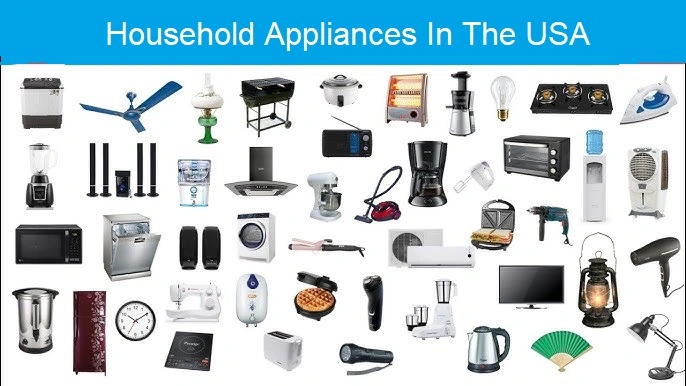
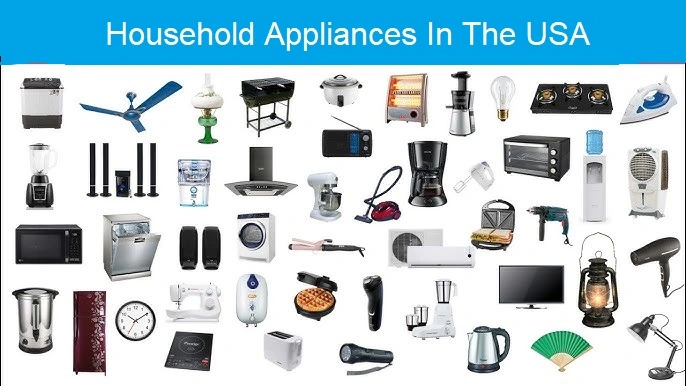
Household appliances are an integral part of daily life in the United States. From the refrigerator in every kitchen to the smart speaker in the living room, these devices save time, improve comfort, and increasingly connect to the internet. This article provides a category-wise analysis of appliance ownership, market data, and emerging trends based on the most recent 2025 statistics.
Market Overview: A $97 Billion Industry
The U.S. home appliances market is massive and growing. In 2025, the total market was valued at USD 97.18 billion. Driven by new technologies, rising homeownership rates, and a strong demand for energy-efficient models, the market is expected to nearly double to USD 194.77 billion by 2035.
Within this total, the segment for “major appliances” (also called white goods – refrigerators, ovens, dishwashers, washers, and dryers) was valued at USD 42.73 billion in 2025. Notably, 38% of U.S. adults plan to replace at least one major appliance within the next six months, indicating a strong replacement cycle.
Category-Wise Ownership Data (USA, 2025)
The following table shows the percentage of U.S. households that own each appliance category:
| Appliance Category | Ownership Rate | Notes |
| Refrigerator | 85% – 90%+ | Near-universal; considered essential |
| Microwave Oven | 74% | Second most common after refrigerator |
| Clothes Dryer | 80%+ | Highest global ownership rate |
| Clothes Washer | 78%+ | Typically paired with a dryer |
| Dishwasher | ~68% | But 20% of owners use it less than once a week |
| Oven/Range | ~80% | Standard in nearly every kitchen |
| Vacuum Cleaner | 78%+ | Upright and stick types most popular |
The Rise of Smart Appliances & IoT Devices
Smart home technology has moved from luxury to mainstream. As of 2025:
- 45% of U.S. internet households own at least one smart home device.
- 23% specifically own a smart appliance (up from 15% in 2020).
The most popular smart devices are:
| Smart Device | Ownership (% of U.S. households) |
| Smart Speaker (e.g., Amazon Echo, Google Nest) | 73% |
| Robot Vacuum | 29% |
| Smart Refrigerator | 18% |
| Smart Thermostat | ~15% |
| Smart Doorbell / Camera | ~25% (combined estimate) |
These devices are part of the Internet of Things (IoT), allowing remote control via smartphone apps and voice assistants.
Key Trends Shaping the Market in 2025
- Energy Efficiency – With rising electricity costs, ENERGY STAR certified appliances are in high demand. Refrigerators and air conditioners have seen the biggest efficiency gains.
- Replacement over Repair – The average age of replaced appliances has dropped. Many consumers prefer buying a new appliance rather than repairing an old one, especially for washers and dryers.
- Space-Saving & Multi-Function – Smaller households and urban apartments are driving sales of compact refrigerators, microwave-air fryer combos, and washer-dryer combos.
- Smart Integration – Appliances that work seamlessly with Alexa, Google Home, or Apple HomeKit command higher prices and consumer interest.
Major Brands Dominating the U.S. Market
Across all categories, the leading brands in 2025 are:
- Whirlpool (including Maytag, KitchenAid) – Strong in washers, dryers, and refrigerators.
- LG – Leader in smart refrigerators, washing machines, and dishwashers.
- Samsung – Known for French door refrigerators and smart ovens.
- GE Appliances (now Haier-owned) – Popular for ranges, dishwashers, and built-in products.
- Bosch – Premium dishwashers and laundry pairs.
- iRobot – Dominant in robot vacuums (Roomba).
Conclusion
U.S. households continue to rely on a wide range of appliances, from basic refrigerators to AI-powered smart ovens. With a market exceeding $97 billion and nearly half of homes using smart devices, the future of home appliances is connected, efficient, and data-driven. Whether you’re a consumer looking to upgrade or a business studying the market, 2025 presents a dynamic landscape of opportunity.


